
Why Do People Freeze During Emergencies?
If a dangerous situation suddenly happened, would I react immediately — or would I freeze?
It’s a question many people quietly ask themselves. Surprisingly, freezing during an emergency is extremely common. In fact, psychologists and safety professionals recognize it as one of the natural human responses to sudden stress.
Understanding why people freeze during emergencies is an important part of preparing for real-world defensive situations. The good news is that freezing is not a sign of weakness. It’s a biological response that can be improved through training and familiarity with high-pressure environments.
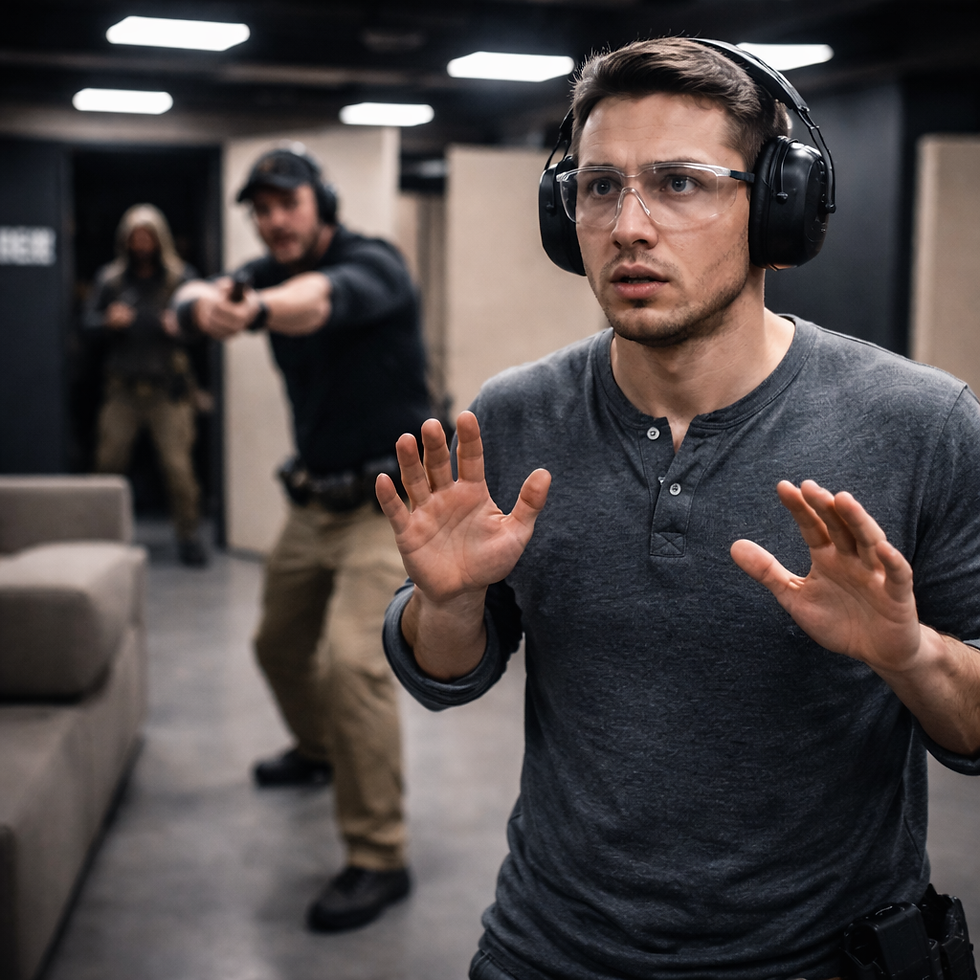
The Three Natural Stress Responses
Most people are familiar with the idea of fight or flight, but researchers now recognize a third common response: freeze.
When the brain detects sudden danger, the nervous system activates survival mechanisms that can trigger one of three reactions:
• Fight – confronting the threat
• Flight – escaping the situation
• Freeze – momentary hesitation while processing the threat
The freeze response happens because the brain is rapidly trying to interpret what is happening and determine the safest course of action.
Why Freezing Happens
Freezing typically occurs when the brain encounters a situation it has never experienced before.
During this moment, the mind is attempting to answer several questions at once:
• Is this truly a threat?
• What is happening?
• What should I do next?
• How dangerous is this situation?
Without prior exposure to similar stress, the brain can momentarily pause while attempting to process the information.
This hesitation may last only a few seconds, but in an emergency situation those seconds can feel much longer.
The Role of Adrenaline and Stress
When a threat appears, the body releases adrenaline and other stress hormones that prepare the body for action.
These responses can cause:
• Elevated heart rate
• Narrowed vision
• Reduced fine motor control
• Heightened awareness
• Increased reaction speed
However, without training or experience managing these sensations, the sudden surge of adrenaline can feel overwhelming. This is one of the reasons people sometimes freeze when confronted with unexpected danger.
How Training Reduces the Freeze Response
The most effective way to reduce freezing is through controlled exposure to realistic decision-making situations.
When individuals experience stress in a structured environment, they gradually become familiar with how their bodies react under pressure.
This type of training helps people learn to:
• Recognize stress signals
• Slow down their decision-making process
• Maintain situational awareness
• Respond deliberately rather than react impulsively
Over time, repeated exposure builds confidence and reduces hesitation.
Why Preparedness Matters
Preparedness is not about expecting danger. It’s about understanding how the mind and body respond when unexpected situations occur.
Many individuals in Anaheim Hills pursue defensive training not because they anticipate danger, but because they value responsibility and preparedness.
Education and training allow people to understand how stress affects decision-making and how to maintain composure when it matters most.
Frequently Asked Questions About Freezing During Emergencies
Why do people freeze during dangerous situations?
Freezing happens when the brain encounters a sudden situation it has never processed before. In that moment, the mind is rapidly trying to determine whether the situation is truly dangerous and what action should be taken. Without prior exposure to similar stress, the brain may pause briefly while evaluating the threat.
Is freezing during an emergency a normal response?
Yes, freezing is a completely natural biological response. It is part of the body’s survival system and occurs when the brain is rapidly processing new information. Many people experience a brief pause before reacting in stressful situations. Training and experience can help shorten this hesitation over time.
Can training help prevent freezing in emergencies?
Training can significantly reduce the likelihood of freezing because it introduces controlled exposure to stress. When individuals experience decision-making scenarios in a structured environment, the brain becomes more familiar with those conditions. This familiarity allows people to recognize stress responses and respond more confidently.
How does stress affect reaction time?
Stress can both help and hinder reaction time. Adrenaline can increase alertness and speed up reflexes, but it can also overwhelm the brain if someone is not accustomed to operating under pressure. Training helps individuals learn how to manage these sensations so they can make clearer decisions.
What is stress inoculation training?
Stress inoculation training is a structured approach that gradually introduces individuals to manageable levels of stress during instruction. This allows the body and mind to adapt to pressure in a safe environment. Over time, this exposure improves confidence, awareness, and decision-making under stress.
If you’re interested in understanding how structured training environments help individuals manage stress and improve decision-making, United Defense Tactical Anaheim Hills offers a complimentary introductory session. It provides an opportunity to observe how training is conducted and experience the environment firsthand.
You can review the details of the free introductory session here:


Comments